Stormwater Quality
Power Washing
Power Washing Description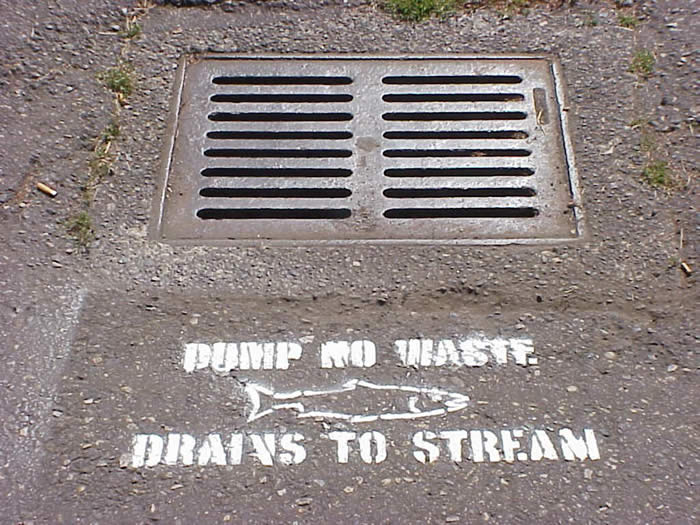
Wastewater from power washing must not be allowed to enter the storm sewer system and must be disposed of properly. Power washing combined with proper wastewater collection can prevent or reduce fine-grained sediment particles, anti-freeze, oil, paint, or trash from polluting stormwater. When services are contracted, this written procedure should be provided to the contractor so they have the proper operational procedures. In addition, the contract should specify that the contractor is responsible for abiding by all applicable municipal, state, and federal codes, laws, and regulations.
Procedures
- Use dry methods for surface pre-cleaning, such as using absorbent on small oil spots and sweeping up trash, debris, dirt, and used absorbent before power washing.
- Minimize the amount of water used during power washing activities.
- Avoid using cleaning products that contain hazardous substances (e.g., hydrofluoric acid, muriatic acid, sodium hydroxide, bleach) that can turn wastewater into hazardous waste.
Wastewater Collection
- Identify the locations of all storm drains in the area and place inlet protection or drain covers at all locations, as needed.
- Locate high and low spots on the property to determine the area where wastewater will be pooled for collection.
- Equipment to contain and collect wastewater generated by power washing includes vacuum pumps, booms, berms, portable containment areas, weighted storm drain covers, inflatable plumber’s plugs, oil and water separators, holding tanks, portable sump pumps, hoses, and absorbent pads.
- Avoid mixing non-hazardous wastewater with wastewater known to contain hazardous substances or hazardous levels of pollutants.
- Place an oil-absorbent mat or pad on top of collected wastewater to help reduce the amount of oil re-deposited on the surface of the collection area.
- Once wastewater has been collected, visible solids remaining in the collection area after liquids have evaporated must be swept up and properly disposed to prevent future discharges to the storm sewer system.
Employee Training
- Periodically train applicable employees who perform power washing activities on this written procedure. Information regarding how to avoid and report spills will be presented during the training
For more info: (970) 871-8205 or stormwater@steamboatsprings.net